The Eachine E520S sits in an interesting position in the beginner drone market: it has GPS hold, foldable arms, an app-connected FPV camera, and one-key flight modes, all for well under $60. That sounds like a lot of drone for the money — and it largely is, with some important caveats about what "4K camera" actually means at this price point.
If you've never flown a drone before and want GPS-assisted stability without spending $350 on a DJI Mini 2 SE, the E520S is worth understanding. Here's an honest look at what it does well and where it falls short.
Camera: What "4K" Actually Means Here
Let's get this out of the way upfront, because it's the thing most people misunderstand about budget camera drones: the E520S advertises 4K video, and it does technically record at 3840x2160 resolution. However, the sensor driving that resolution is a small, fixed-aperture 1/x" CMOS with no mechanical stabilization and no optical zoom.
What this means in practice: 4K footage from the E520S looks softer and more compressed than 4K from a phone camera, let alone from a DJI Mini 4 Pro. The small sensor gathers less light, so footage in anything less than bright outdoor daylight loses detail quickly. Electronic image stabilization (EIS) is present and helps with vibration, but doesn't replace the 3-axis gimbal stabilization you get from DJI.
For aerial snapshots on a sunny day? The camera is fine. For cinematic footage you're proud to show? Budget for a DJI or wait.
The FPV live view streams through the Eachine app (iOS/Android) via Wi-Fi at lower resolution than recorded video — the real-time feed is typically 720p or lower. Range on the Wi-Fi connection is shorter than the radio control range, so you may lose FPV picture before you lose control of the aircraft.
This is an honest limitation, not a dealbreaker, for a drone at this price. Just don't buy it expecting DJI camera quality.
GPS Features: Hold, Return-to-Home, and Altitude Lock
The GPS module is the genuinely useful feature that separates the E520S from lower-tier toy drones. When GPS lock is established (requires being outdoors with clear sky view, typically 1–2 minutes), the drone:
- Holds position in hover without drifting — you can let go of the sticks and it stays put. This is a huge deal for beginners who are still learning the sticks.
- Altitude hold via barometric pressure sensor works even without GPS (indoors), keeping the drone at a fixed height so you only have to manage horizontal movement.
- One-key return to home: Press the button and the drone flies back to its takeoff point and lands. Useful if you lose orientation or the drone gets far away. This relies on GPS lock at takeoff — don't skip the initialization step.
- Low battery return: When the battery drops to a threshold, the drone automatically returns to home rather than landing wherever it is and potentially crashing.
These features work as advertised in calm conditions. In wind above 20–25 km/h, the GPS hold becomes less stable because the motors have limited authority against sustained gusts. The E520S is a light drone (around 160g) and wind affects it more than heavier aircraft.
Flight Time, Range, and Control
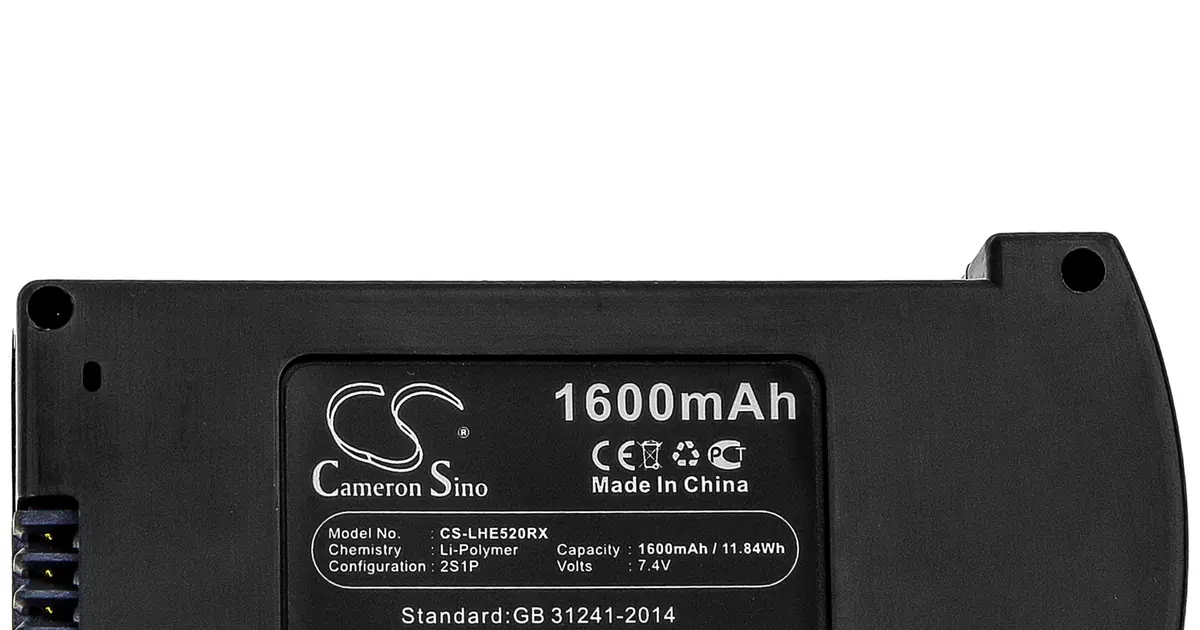
Advertised flight time is 16 minutes. Real-world flight time in calm conditions with FPV active runs around 13–15 minutes per battery. With wind or aggressive throttle inputs, expect 10–12 minutes. The included battery is a 7.4V LiPo; buying a second battery doubles your effective session time and is highly recommended.
Control range is rated up to 100m, which is the practical limit for this class of toy-grade drone with a 2.4GHz radio controller. At 100m the drone becomes quite small visually, and FPV via the phone app will have dropped signal at that range. Fly within comfortable visual range — around 50–70m — for reliable operation.
The radio controller is the standard layout: left stick for throttle/yaw, right stick for pitch/roll. Speed modes are typically three levels — beginner mode caps tilt angle for more docile handling, sport mode allows faster, more agile flight. Beginners should stay in the lowest speed setting until they're comfortable with orientation and control response.
Beginner Flight Modes
Headless mode removes the need to understand the drone's orientation relative to you. In headless mode, pushing the stick forward always moves the drone away from you regardless of which direction it's pointing. Useful for beginners, but it's worth learning to fly without it as you progress — headless mode removes an important situational awareness skill.
One-key takeoff/landing: Press a button and the drone takes off to approximately 1.2m hover and holds, or lands from current altitude. Removes the most stressful part of beginner flying (the hover-at-ground-level phase where small errors cause crashes).
One-key return: Covered above. Works well in calm conditions with GPS lock.
Circle fly / follow me modes: Listed in specs. In practice at this price point, follow-me accuracy relies on phone GPS rather than a subject-tracking camera algorithm — the drone follows your phone's location, not your body. It's a fun feature but don't rely on it for action shots.
Registration Requirements
In most countries, drones under 250g are exempt from registration — and the E520S comes in around 160g, well under that threshold. However, this changes by jurisdiction: some countries set the threshold lower, and some require registration regardless of weight for drones with cameras.
In the US: under 250g means no FAA registration required, but recreational flying rules still apply (line of sight, no flying near airports, no flying over people). In the EU: under 250g falls in the Open A1 subcategory, generally no registration required for recreational use but check your country's specific implementation. Always verify your local regulations before flying — the information above is general guidance, not legal advice.
Eachine E520S vs. DJI Mini 2 SE vs. Holy Stone HS720E
DJI Mini 2 SE ($299 retail): This isn't a fair fight on price, but it's the comparison people make. The Mini 2 SE has a proper 3-axis mechanical gimbal, a significantly larger sensor, 10km OcuSync radio range, 31-minute flight time, and DJI's full flight safety ecosystem. It's 249g, which means no registration in most markets. If you're serious about aerial photography, save for the Mini 2 SE — it's in a different performance category. The E520S is appropriate if $300 is genuinely out of budget or you want to learn on something cheap before investing.
Holy Stone HS720E ($120–$150 retail): Closer competition. The HS720E also has GPS, a larger sensor than the E520S (EIS 4K), and longer flight time (around 23 minutes). Build quality is noticeably better and the app is more polished. At roughly double the E520S price, it's a meaningful step up for users who want better camera output without going full DJI. If your budget stretches to $130, the HS720E is the stronger recommendation.
Eachine E520S (AliExpress, check current price): Wins on price. Good beginner GPS drone for learning to fly. Camera is functional for bright-day casual shots. Not a serious aerial photography tool.
The Eachine E520S is a capable beginner GPS drone for under $60 — fly it to learn, but don't expect DJI camera results.
Pros
- ✓GPS position hold makes hovering stable and stress-free for beginners
- ✓One-key return to home and low-battery auto-return are reliable safety features
- ✓Foldable design packs down to jacket-pocket size
- ✓Under 250g — no registration required in most countries
- ✓Headless mode and one-key takeoff make first flights accessible
Cons
- ✗Camera sensor is small — 4K label is technically accurate but footage quality is limited vs phone cameras
- ✗15-min real-world flight time; buy a second battery if planning longer sessions
- ✗Wi-Fi FPV range is shorter than control range — live view drops before signal does
- ✗Wind stability is limited at higher wind speeds given the drone's light weight
Buy if...
- •Complete beginners who want to learn GPS drone flying before investing in a DJI
- •Parents buying a first drone for a teenager who is interested in aerial photography
- •Casual outdoor enthusiasts who want fun aerial shots without a serious camera investment
- •RC hobbyists who want to add a GPS quadcopter to their collection under $60
Skip if...
- •Anyone who wants quality video footage — step up to the Holy Stone HS720E ($120) or DJI Mini 2 SE ($299)
- •Pilots who want to fly in wind — the light airframe struggles above 20 km/h gusts
- •Anyone expecting DJI-level app experience — the Eachine app is functional but basic
Frequently Asked Questions
In most countries, drones under 250g do not require registration. The E520S weighs approximately 160g. In the US this means no FAA registration, though recreational flying rules still apply. Check your local civil aviation authority's rules — regulations vary by country and can change.
The drone records video at 3840x2160 pixels, which is 4K resolution. However, the small sensor and lack of a mechanical gimbal mean the footage quality is not comparable to a smartphone or a DJI drone at 4K. Expect decent results in bright daylight, softer footage in shade or at golden hour, and electronic stabilization that helps but doesn't fully replace a physical gimbal.
The radio control range is rated at 100m. The Wi-Fi FPV connection to your phone typically drops before that — around 50–70m under clear conditions. Keep the drone in comfortable visual line of sight, which is typically 50–80m, for reliable control and live video feed.
Advertised flight time is 16 minutes. Real-world flight in calm conditions with FPV active is typically 13–15 minutes. Buying a second battery is strongly recommended for any session longer than 10 minutes of actual flight time, as charging a single battery takes around 60–90 minutes.
Yes. The altitude hold function uses a barometric pressure sensor and works indoors or when GPS is unavailable. Position hold (keeping the drone from drifting horizontally) requires GPS. Indoor flying without GPS means you'll need to manage all horizontal drift manually, which is more demanding but manageable at low speed.