Two of the most competitive wearables in the under-$70 price bracket — and they're aimed at completely different users despite looking like they compete directly. The Amazfit Bip 5 is a full smartwatch with a large rectangular AMOLED, built-in GPS, and 120+ sport modes. The Xiaomi Mi Band 10 is a refined fitness band with a smaller display, double the battery life, and no GPS. Price difference is $15–25 depending on AliExpress promotions.
This comparison cuts through the spec sheets to tell you which one actually suits your lifestyle.
| Criterion | Amazfit Bip 5 | Xiaomi Mi Band 10 |
|---|---|---|
| Price (AliExpress) | $45–$65 | $30–$45 |
| Display type | 1.91" AMOLED, 320×380 | 1.62" AMOLED, 490×192 |
| Battery life (typical) | 10 daysdays | 21 daysdays |
| GPS built-in | Yes (GPS+GLONASS+BeiDou) | No (phone GPS only) |
| SpO2 monitoring | Yes | Yes |
| Heart rate monitoring | Continuous | Continuous |
| Stress tracking | Yes | Yes |
| Sports modes | 120+ | 150+ |
| Waterproofing | 5ATM | 5ATM |
| App ecosystem | Zepp App | Mi Fitness App |
| Weight (without strap) | 26gg | 14.2gg |
Display and Design
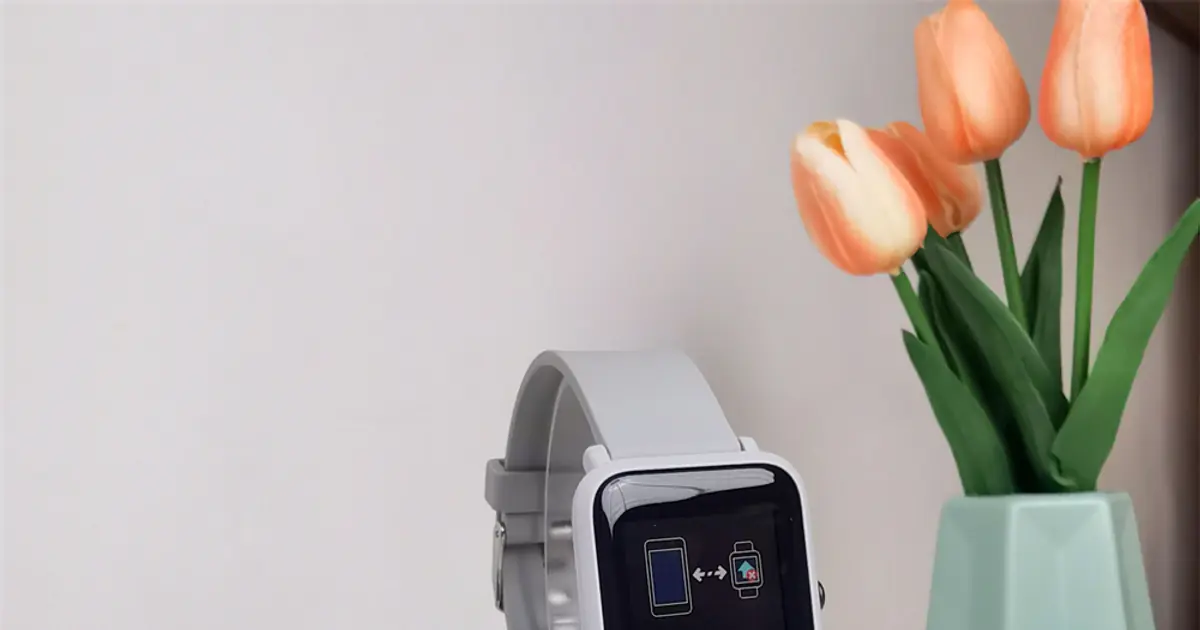
The Amazfit Bip 5 has the larger screen: a 1.91-inch AMOLED with a 320 by 380 resolution. The watch face covers most of the front panel, and at 1500 nits peak brightness, it holds up well outdoors. The case is 43.6 mm wide — proper watch proportions. Amazfit markets this as a true smartwatch, not a fitness band, and the dimensions reflect that.
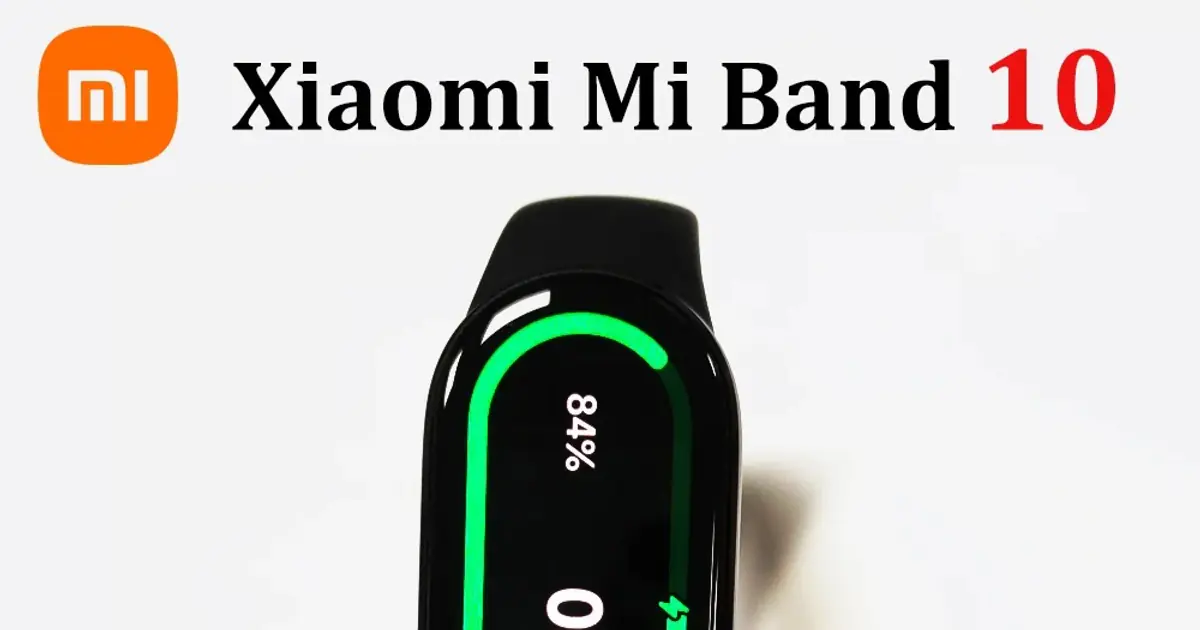
The Mi Band 10 runs a 1.62-inch AMOLED at 490 by 192 resolution in the standard capsule form factor Xiaomi has refined over a decade. The pixel density is actually higher than the Bip 5 at the individual pixel level, and the Always On Display feature (showing time and basic stats at all times) is more power-efficient on the Band 10's smaller screen.
For wearers who want a watch that looks like a watch — something you'd wear with business casual clothing — the Bip 5 fits that role better. For wearers who want a discreet fitness tracker that disappears under a shirt cuff, the Mi Band 10 is less conspicuous.
Both use silicone straps. The Bip 5 accepts standard 20 mm straps — aftermarket leather, nylon, and metal mesh options are plentiful on AliExpress for $3–8. The Mi Band 10 uses Xiaomi's proprietary band system, which has a smaller aftermarket selection but still offers dozens of options.
GPS: The Key Differentiator
This is the comparison's defining question. The Amazfit Bip 5 has multi-system GPS built in — GPS, GLONASS, and BeiDou simultaneously. That means it can track runs, cycles, and hikes without your phone anywhere nearby.
The Xiaomi Mi Band 10 has no GPS at all. When you start a GPS workout in the Mi Fitness app, the band connects to your phone's GPS to record the route. This works fine if you always carry your phone while exercising. If you run, cycle, or hike without your phone — or if you want to leave your phone at your locker in the gym while going on a trail — the Mi Band 10 is blind.
In practice, phone GPS tethering is accurate (modern phone chipsets are often more precise than entry-level watch GPS) and saves the band's battery dramatically. But it is a meaningful constraint. The Bip 5's built-in GPS capability is the primary reason someone would pay the extra $15–25 for it.
GPS battery life on the Bip 5 in continuous tracking mode: approximately 9 hours. That covers a marathon or a long trail run without recharging.
Battery Life: Mi Band 10 Wins Clearly
The Xiaomi Mi Band 10 is rated for 21 days of typical use. That's battery life measured in weeks — you'll charge it roughly twice a month. In GPS workout mode via phone tethering, the band itself uses minimal battery (the phone does the GPS work), so even active users routinely see 18–21 day battery life.
The Amazfit Bip 5 manages 10 days in typical use with health monitoring active. That's still strong for a GPS watch — Garmin Forerunner 55 gets 14 days in smartwatch mode — but it's half the Mi Band 10's figure. In GPS continuous mode, the Bip 5 drops to about 9 hours.
For travelers who don't want to pack chargers, for people who simply forget to charge wearables, and for users who want to wear the device during sleep without worrying about morning battery percentage, the Mi Band 10's 21-day battery is a genuine quality-of-life advantage.
Health Sensors and Tracking Accuracy
Both devices include:
- Continuous optical heart rate monitoring
- Blood oxygen (SpO2) spot readings
- Stress tracking via heart rate variability
- Sleep tracking with stage detection (REM, light, deep)
- Menstrual cycle tracking
- Calorie estimation
The core sensor hardware is similar in both devices. The Bip 5 uses Amazfit's BioTracker 4.0 PPG sensor; the Mi Band 10 uses Xiaomi's latest generation PPG. Independent testing suggests both have similar accuracy characteristics: heart rate typically within 5 BPM of chest strap reference during moderate cardio, SpO2 within 2–3% of pulse oximeter readings.
The Bip 5's stress monitoring runs the same kind of HRV-based calculation as the Mi Band 10's. Neither is clinically validated — both provide useful trending data for lifestyle awareness, not medical diagnostics.
One health feature the Bip 5 has that the Mi Band 10 lacks in depth: VO2 Max estimation. Amazfit uses outdoor GPS run data to estimate your aerobic fitness level. The Mi Band 10 lacks this since it has no independent GPS to gather the required pace-vs-heart-rate data.
Sports Modes
The Mi Band 10 lists 150+ sports modes; the Bip 5 lists 120+. In raw numbers, the Mi Band 10 wins. In useful modes per day, this distinction rarely matters — both cover running, walking, cycling, swimming, yoga, strength training, and the vast majority of common activities.
The crucial difference is that the Bip 5's outdoor running, cycling, and hiking modes deliver GPS tracks, distance based on GPS data, and pace calculated from actual movement. The Mi Band 10's outdoor modes either tether to phone GPS (getting the same data if you carry your phone) or operate in non-GPS mode (providing step-count-based distance estimates, which are much less accurate).
For gym workouts and indoor activities, the Mi Band 10 and Bip 5 perform equivalently — neither needs GPS for treadmill, rowing, yoga, or strength training.
App Ecosystem
The Amazfit Bip 5 uses the Zepp app (iOS and Android). Zepp has improved significantly since 2022 — the dashboard is clean, historical health data is accessible, and export options include CSV and connections to Apple Health and Google Fit. Amazfit's PAI (Personal Activity Intelligence) scoring adds a health motivation layer beyond step counts.
The Xiaomi Mi Band 10 uses the Mi Fitness app (replacing the old Mi Fit app). Mi Fitness is a well-polished app with clean health dashboards, activity rings similar to Apple's, and a deeper notification management system than Zepp. It integrates with MIUI on Xiaomi phones for additional features but works well on any Android or iOS device.
Neither app offers deep training analytics comparable to Garmin Connect, Polar Flow, or WHOOP. Both are fitness awareness tools, not coaching platforms. For users who just want to see sleep data, step counts, and basic workout summaries, both apps deliver comfortably.
The Amazfit Bip 5 is the better device for active users who track outdoor workouts independently. The Xiaomi Mi Band 10 is the better device for everyone else — lighter, longer-lasting, and cheaper. Neither is a wrong choice; you're choosing between capability and endurance.
Pros
- ✓Bip 5: Built-in GPS means proper outdoor run and cycle tracking without carrying a phone
- ✓Bip 5: Larger display at 1.91 inches reads more clearly at a glance in bright conditions
- ✓Mi Band 10: 21-day battery life — charge twice a month, not twice a week
- ✓Mi Band 10: 14.2g body weight — genuinely invisible on the wrist during sleep and casual wear
- ✓Mi Band 10: Lower price leaves budget for accessories or a spare charger cable
Cons
- ✗Bip 5: Proprietary magnetic charging cable — a USB-C port would be more practical
- ✗Bip 5: 10-day battery requires twice-monthly charging under active GPS use
- ✗Mi Band 10: No GPS — outdoor workout distance accuracy depends entirely on phone proximity
- ✗Mi Band 10: Smaller display makes reading workout stats at a glance harder in bright sunlight
Frequently Asked Questions
The Amazfit Bip 5 is better for runners who train without a phone. It has built-in GPS for accurate pace and distance. If you always run with your phone, the Mi Band 10 can tether to phone GPS and delivers similar data at a lower price.
The Xiaomi Mi Band 10 lasts 21 days in typical use, more than double the Amazfit Bip 5's 10 days. The tradeoff is that the Mi Band 10 has no independent GPS, which is why its battery lasts longer.
No. The Mi Band 10 has no built-in GPS. It can track step count and heart rate during any activity, but distance and route data for outdoor activities require your phone's GPS connection via Bluetooth.
Both are well-designed in 2026. Mi Fitness has a slightly more polished dashboard on Xiaomi devices. Zepp is more feature-rich for health metrics analysis on non-Xiaomi phones. Practically, either will satisfy a casual fitness tracker user.
Yes, if you exercise outdoors without your phone regularly, or if you want a device that looks and behaves like a smartwatch rather than a fitness band. No, if you always carry your phone and battery longevity matters more to you than a bigger display.