The 3F UL Gear LanShan 1 has become something of a legend in the ultralight backpacking community. A solo shelter weighing approximately 730g, built from 15D silnylon with a rodless trekking-pole design, selling for $50–70 on AliExpress — it sounds too good to be true. After years of trail reports, PCT and CDT trip reports, and community testing, the verdict is clear: it largely delivers.
This is not a tent for car campers or weekend glampers. The LanShan 1 is designed for one specific type of user — the solo backpacker who has already committed to ultralight packing, carries trekking poles as a matter of course, and is willing to spend 15 minutes practicing setup before heading into the backcountry. For that user, the LanShan 1 is one of the best tents available at any price.
The 3F UL Gear LanShan 1 delivers genuine ultralight performance — sub-800g packed weight, solid 3-season rain protection, and a roomy single-person interior — at a price that makes Western ultralight tents look like luxury goods. The trekking-pole setup and condensation management require some learning, but the core shelter performance is exceptional for the weight and cost.
Pros
- ✓730g packed weight including stakes — genuinely competitive with Big Agnes, NEMO, and MSR ultralight options at 2–3x the price
- ✓15D silnylon construction delivers an impressive strength-to-weight ratio for a tent under $100
- ✓Single-wall inner with silnylon rainfly handles real 3-season rain well (2000mm+ HH rating)
- ✓Generous vestibule provides covered gear storage — a solo hiker can stash a 45L pack outside the sleeping area
- ✓Interior width and length are comfortable for taller hikers (up to 185cm) compared to other solo ultralight options
- ✓Price of $50–70 on AliExpress is extraordinary for the specs delivered
Cons
- ✗Requires trekking poles for setup — not suitable for hikers who don't carry poles
- ✗Single-wall design creates more condensation than double-wall alternatives like the MSR Hubba Hubba
- ✗Setup takes 15–20 minutes to learn; practice before your first backcountry trip
- ✗15D silnylon requires careful site selection — avoid dragging the tent over rough ground
Design and Materials
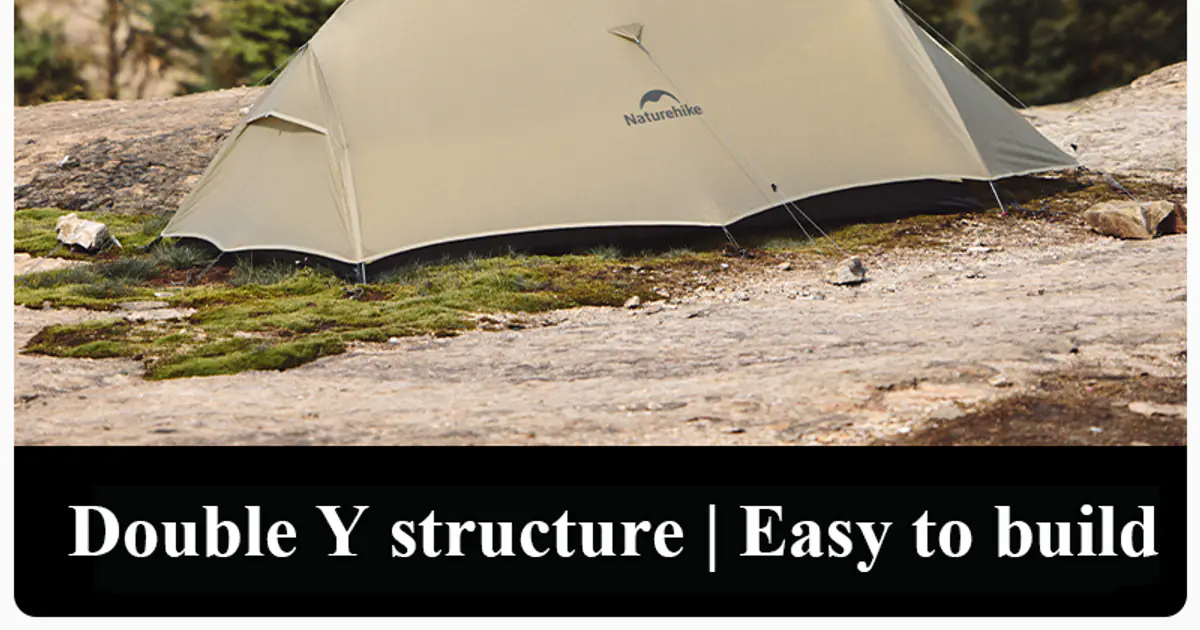
The LanShan 1 uses a rodless design: your trekking poles (or aftermarket tent poles, sold separately) provide the structural support for the shelter. One pole at each end, angled outward, creates the classic A-frame tent profile. This eliminates the weight of dedicated tent poles — the single largest weight component in a conventional tent — which is how 3F UL Gear achieves the sub-800g figure.
The 15D silnylon fabric is the other key to the weight. Standard backpacking tents use 20D or 30D fabric; dropping to 15D saves meaningful weight but requires more careful handling and more thoughtful site selection. The tradeoff is real: 15D silnylon will abrade on rough granite or sharp pine needles if dragged across them. The reward is a packed weight that most conventional tents can't approach.
The tent uses a single-wall design for the rainfly, meaning the fly doubles as the structural outer layer rather than covering a separate inner tent. The inner is a 15D nylon mesh-and-solid panel combination that clips into the fly. Setup sequence: stake the corners, insert poles, clip in the inner. This creates a double-layer system — fly plus inner — which manages weather but requires active condensation management (more on that below).
The rainfly is silicone-coated on both sides (sil/sil), which is superior to single-side silicone coating for both waterproofing and UV resistance. The seams are factory-taped at the critical stress points. Hydrostatic head rating is 2000mm+, which handles anything short of extended torrential downpour. In three-season backpacking conditions — spring thunderstorms, autumn rain, moderate alpine weather — the LanShan 1 performs without meaningful leakage.
Setup and Practical Use
The setup learning curve is real and worth addressing honestly. On your first attempt without practice, the LanShan 1 will take 30 minutes and some frustration. On your fifth attempt, it's 10–12 minutes. By the time you've done it ten times, sub-10 minutes becomes routine.
The correct sequence matters: stake the four corner groundsheet stakes first, then set the trekking poles at the correct angle (roughly 110–115 degrees from the ground for a typical person — experiment to find what gives you the best interior height), then tension the guylines. The guylines are not optional — they're structural. A poorly guyed LanShan 1 in wind will collapse or sag unpleasantly.
Trekking pole angle is the most common beginner mistake. Too vertical and the fly sags and pools rain. Too angled and the interior height drops uncomfortably. Most hikers settle on a pole height of around 120–125cm for good interior space with a standard 170–180cm trekking pole at roughly half-extension.
Site selection matters more than with freestanding tents. A good LanShan 1 site has soft ground for staking, is relatively level, and has some natural wind protection. The tent doesn't freestand — you can't pick it up and move it once pitched. Choose your spot carefully before driving the first stake.
The vestibule is generous for a solo tent — easily large enough to stow a 45L pack plus boots and wet gear under cover. The single vestibule exit means entering and exiting from one side, which is a minor convenience trade-off versus dual-vestibule designs.
Condensation Management
This is the LanShan 1's most discussed weakness, and it deserves an honest treatment. Single-wall and close-to-single-wall designs accumulate more condensation than fully double-wall designs. On cold or humid nights, the inner surface of the fly will collect moisture; the inner tent mesh helps but doesn't eliminate drips on the sleeping bag if you're brushing against the inner.
Three practices manage this significantly:
Ventilation: open the vestibule partially rather than zipping it fully closed. Air movement reduces condensation dramatically. Even in cold weather, leave 5–10cm of vestibule opening for airflow.
Site selection: cold air pooling in valley bottoms creates the worst condensation conditions. Camp on slightly elevated terrain with natural airflow when possible.
Morning routine: unzip and air the tent as soon as you wake. The morning sun and airflow dry condensation quickly — what looks like a wet tent at 6am is usually dry by 7am in normal conditions.
Users who camp in humid Pacific Northwest conditions or in valley bottoms will experience more condensation than those in alpine or desert terrain. If your primary camping environment is chronically humid, consider the Naturehike Cloud-Up 2 instead — its double-wall design manages condensation better at the cost of 560g extra weight.
LanShan 1 vs Naturehike Cloud-Up 2 vs MSR Hubba Hubba
vs Naturehike Cloud-Up 2 ($90–130, ~1.29kg): The Cloud-Up 2 is a two-person tent, which is inherently more space than a solo hiker needs. Its double-wall freestanding design sets up faster and manages condensation better. You're paying 560g in weight and $40–60 in price for those conveniences. If you're not strictly counting grams, the Cloud-Up 2 is a more relaxed camping experience. For ultralight solo hikers, the LanShan 1 wins on weight and cost decisively.
vs MSR Hubba Hubba NX (~$500, ~1.36kg): The MSR is a premium two-person tent with DAC Featherlite poles, exceptional build quality, and a warranty backed by a Western company. It weighs more than the LanShan 1. It costs 6–8x more. The LanShan 1 delivers better weight performance for less money — the gap in material quality exists but doesn't translate into dramatically better trail performance for most conditions. For serious mountaineering or extreme weather, the MSR's build quality matters. For PCT-style 3-season thru-hiking, the LanShan 1 is a rational choice.
Buy if...
- •Solo thru-hikers on the PCT, CDT, or similar multi-day routes who carry trekking poles and count every gram
- •Ultralight backpackers who want genuine sub-800g shelter without spending $300–500 on Western brands
- •Experienced campers comfortable with tarp-style pitching technique who appreciate the setup flexibility of a pole-based design
- •Budget-conscious backpackers who want the best weight-to-price ratio available in a solo tent
Skip if...
- •Hikers who don't carry trekking poles — either add poles to your kit or buy the Naturehike Cloud-Up 2 for a freestanding option
- •Campers who primarily camp in high-humidity environments where condensation management is critical — the MSR Hubba Hubba or Naturehike Cloud-Up 2 handles this better
- •Car campers or those who want a quick setup without a technique learning curve
- •Backpackers who share a tent with a partner — this is a true solo shelter with no comfortable two-person option
Frequently Asked Questions
If you already carry trekking poles for hiking, you need nothing extra — the LanShan 1 uses your existing poles for setup. If you don't carry trekking poles, you have two options: buy a pair (which adds hiking benefits beyond tent setup) or buy aftermarket tent poles from 3F UL Gear or compatible sellers. A pair of budget trekking poles on AliExpress costs $15–30 and works adequately for tent pitching.
The rainfly has a hydrostatic head rating of 2000mm or better, which is solid for a 3-season backpacking tent. The groundsheet is rated similarly. In practice, the tent handles spring and autumn rain storms without leaking through the fabric. Seam tape covers the critical stress points. For extended heavy downpours or snow loading, additional seam sealing is recommended as a precaution.
The complete packed weight including the inner tent, rainfly, stakes, and stuff sack is approximately 730–750g (the exact weight varies slightly between production batches). This does not include trekking poles, since most hikers already carry those. The minimalist weight figure — fly and stakes only, no inner — is around 560g for shelter-only use in dry conditions.
No. The LanShan 1 is rated for 3 seasons: spring, summer, and autumn. It handles rain, moderate wind, and temperatures down to around -5°C without issues. Heavy snow loading is not appropriate — the single-pole design does not shed snow well, and the 15D fabric can be stressed by sustained snow weight. For winter camping, choose a 4-season tent with a geodesic or tunnel design.
Technically two people can fit — the floor is 220 x 120cm — but it's genuinely uncomfortable. Two adults in sleeping bags have no elbow room and one person must sleep against the fabric wall. The LanShan 1 is a solo shelter. 3F UL Gear makes the LanShan 2 (two-person version) if you need a shared shelter in the same design language.