Precision measuring tools used to be expensive enough that many hobbyists made do with a tape measure and their best guess. Not anymore. AliExpress has transformed the market — you can buy a stainless steel digital caliper accurate to ±0.02mm for less than $15, or a decent digital micrometer for under $25. The tools your grandfather paid hundreds of dollars for are now within reach of anyone with a 3D printer, a home workshop, or a machining habit.
The catch: not all AliExpress calipers are created equal. The difference between a ±0.02mm and a ±0.1mm caliper is the difference between a precision instrument and a moderately useful stick. This guide breaks down the types of measuring tools available, what accuracy specs actually mean, which materials matter, and which picks are worth buying for different use cases.
Types of Precision Measuring Tools
Understanding the tool types is the first step to buying the right one. These four cover most workshop and hobby measuring needs.
Digital Vernier Calipers
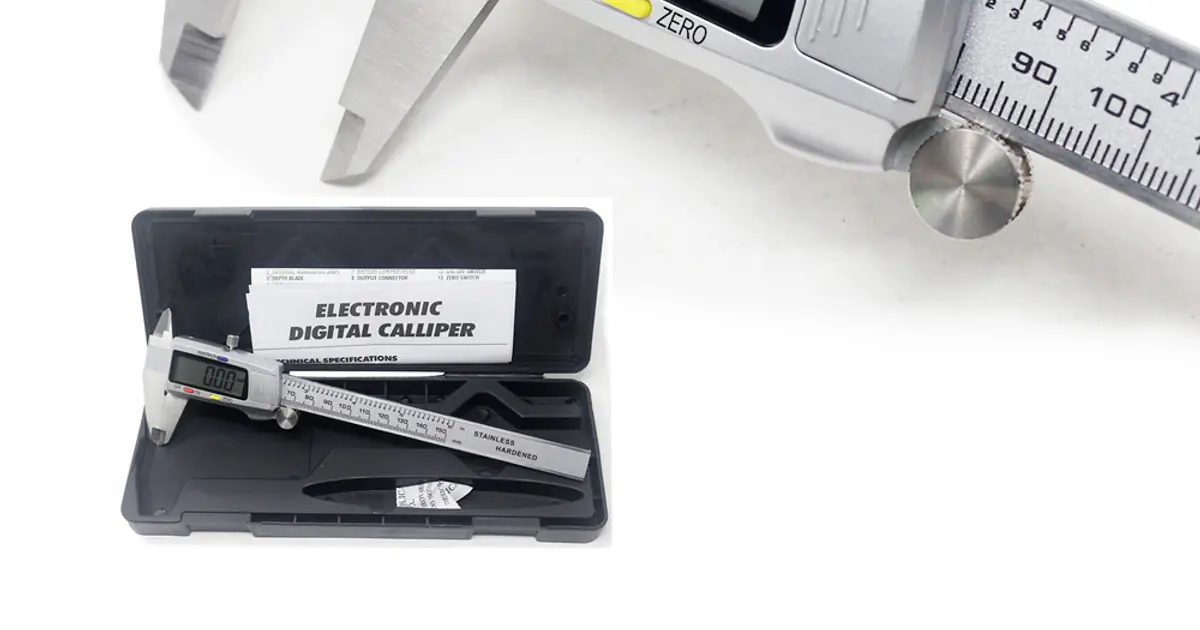
The most versatile and most commonly purchased precision measuring tool. A digital caliper has three measuring surfaces: the outer jaws measure external dimensions (the width of a bolt head, the diameter of a tube), the inner jaws measure internal dimensions (the inside diameter of a pipe fitting), and the depth rod measures depth (the depth of a hole, a slot, or a recessed feature).
Digital calipers display measurements on an LCD in millimeters, inches, or both. Most models switch between units at the press of a button. The "zero" function resets the display at any position, which is useful for incremental measurements — zeroing on one part and measuring how much smaller or larger another part is by comparison.
Accuracy tiers:
- ±0.02mm (±0.001"): Genuine precision grade. Appropriate for machining, engineering work, 3D print calibration, and any task where tolerances matter.
- ±0.05mm: Mid-range. Fine for woodworking, general fitting, and hobby projects where exact tolerances aren't critical.
- ±0.1mm: Budget / entry level. Adequate for rough measuring and checking approximate sizes, but not for anything where fit matters.
Always check the accuracy spec in the listing, not just "digital caliper" in the title. Sellers use the same keywords across all tiers.
Vernier Calipers (Manual Scale)
The analog predecessor — no battery, no LCD, just a precision-engraved vernier scale that requires reading by eye. At fine increments (0.02mm or 0.05mm scale), reading a vernier caliper accurately takes practice. For most buyers in 2026, a digital caliper is strictly better — cheaper batteries last years, and the LCD is faster and eliminates parallax reading errors. The exception: environments where you cannot use electronics (strong magnetic fields, certain wet-environment tool policies in machining shops).
Micrometers
Where calipers measure in the 0–150mm (6 inch) range with ±0.02mm accuracy, a micrometer measures a narrower range (typically 0–25mm per unit) with ±0.001mm accuracy. Micrometers are the right tool when you need to measure shaft diameters, material thickness, or any dimension where tenths of a millimeter matter.
For 3D printing: micrometers are used to calibrate filament diameter (nominal 1.75mm — real tolerance is typically ±0.05mm and affects print quality). For machining: measuring shaft diameters before and after turning to track material removal.
Digital micrometers on AliExpress in the 0–25mm range are available from $15–25. Look for models with a carbide-tipped anvil — carbide resists wear and maintains accuracy far longer than plain steel.
Height Gauges
A height gauge measures the vertical distance from a reference surface (usually a granite or steel surface plate) to a point on a workpiece. Uses include checking flatness, scribing lines at precise heights on metal, and verifying machined part heights relative to a reference surface.
Digital height gauges on AliExpress range from simple 200mm units under $30 to 300mm units with digital readouts and carbide scribers around $40–60. For hobby and light machining use, these are remarkably capable tools at AliExpress prices.
Top Picks: Best Digital Calipers on AliExpress 2026
1. 6-Inch 0–150mm Digital Vernier Caliper (Budget Top Pick) — ~$8–15
The canonical "AliExpress digital caliper" — stainless steel body, LCD display with mm/inch switching, depth rod, zero function. Most reputable sellers list accuracy at ±0.02mm. At this price, you're getting a tool that competes with $40–60 name-brand options from Western tool retailers.
Material note: Check the listing for "stainless steel" vs. "ABS plastic." Plastic calipers are lighter and corrosion-proof, but they flex under jaw pressure and give inconsistent readings on tight dimensions. Stainless steel is the correct choice for anything beyond rough measuring.
Best for: 3D printing calibration, woodworking joint checking, basic workshop measuring, general hobby use.
Top pick canonical title: "6-Inch 0-150mm Digital Vernier Caliper Stainless Steel Electronic LCD Measuring Tool" — this describes the ANENG-style digital caliper widely available on AliExpress.
2. 8-Inch 0–200mm Digital Caliper — ~$15–25
Same construction as the 150mm model but with extended reach. Useful for measuring larger parts — timber width, larger-diameter pipes, box dimensions — without repositioning. The depth rod also extends to 200mm, which is useful for deeper holes.
Best for: Woodworking projects involving wider stock, makers who frequently measure larger components.
3. IP54-Rated Waterproof Digital Caliper — ~$20–35
IP54 dust and splash protection — a meaningful upgrade for workshop use where cutting fluid, coolant, or even high humidity is a concern. Particularly relevant for metalworking hobbyists who use cutting oil at the lathe or mill. Look for listings explicitly mentioning "IP54" or "waterproof" in the title.
Best for: Machine shop use, lathe and mill operators, anyone who works in wet or dusty environments.
4. 0–25mm Digital Micrometer — ~$15–25
A digital micrometer in the 0–25mm range resolves to 0.001mm — 20 times finer than a standard digital caliper. Essential for measuring precision shaft diameters, checking material thickness, or calibrating filament diameter for 3D printing.
Look for a carbide-tipped spindle and anvil — the hardened tips resist wear and maintain accuracy after repeated measurements. A ratchet thimble is also a useful feature: it limits the clamping force applied to the workpiece, preventing over-tightening that would give a falsely small reading.
Best for: Machining, precision metalwork, 3D printer filament calibration, jewelry work.
5. 0–300mm Digital Height Gauge — ~$35–55
A digital height gauge on a base that rides on a reference surface. Scribing function, digital readout, and enough reach for most workshop-scale workpieces. Useful for layout work, checking parallelism, and measuring machined part heights.
For serious machining use, pair with a granite surface plate (also available affordably on AliExpress) as the reference surface.
Best for: Metalworking hobbyists, toolmakers, anyone doing precision layout work.
6. Dial Caliper (Analog Display) — ~$12–20
A mechanical alternative to the digital caliper — uses a needle indicator instead of an LCD. Advantages: no battery, no display issues in bright sunlight or cold environments. Disadvantages: takes slightly longer to read than a digital display. Accuracy is typically ±0.02mm on quality units.
Best for: Users who want a reliable backup to digital tools, outdoor or field measuring where battery management is a concern.
Accuracy and Specification Deep Dive
What ±0.02mm Means in Practice
A caliper with ±0.02mm accuracy can measure a 10.000mm diameter and give you a reading between 9.980mm and 10.020mm. For most hobby and workshop purposes, this is more than adequate. A 3D-printed part's actual dimension is typically within ±0.2mm of the target anyway, making ±0.02mm measurement accuracy far more than sufficient to evaluate it.
For machining parts that need to fit with another machined part (shaft into bearing, bolt into threaded hole), ±0.02mm accuracy is the practical minimum. A ±0.1mm caliper could place you anywhere from "sliding fit" to "press fit" with no way to tell which.
Reading Metric vs. Imperial
All AliExpress calipers switch between mm and inches at the press of a button. For 3D printing, machining, and most technical applications, metric (mm) is the more useful display — tolerances and specifications are defined in mm almost universally outside the United States. Imperial (inches) remains useful for working with American lumber dimensions, pipe threads (NPT is still in inches), and American engineering drawings.
Stainless Steel vs. Carbon Steel vs. ABS Plastic
Stainless steel is the standard material for quality calipers. It resists corrosion from cutting oils and workshop humidity, and it's stiff enough to maintain accuracy under jaw pressure.
Carbon steel is stiffer and harder than stainless, used in high-end machinist's tools. Also more susceptible to rust in wet environments without proper care (oil after use).
ABS plastic is used in lower-cost calipers — lightweight and corrosion-proof, but flexes enough to compromise readings on tight dimensions. Acceptable for rough measuring; not suitable for precision work.
Use Case Recommendations
3D Printing
Primary need: measuring printed parts to evaluate dimensional accuracy, calibrating X/Y/Z steps, and checking filament diameter.
Recommended tools: a ±0.02mm digital caliper (150mm range is fine for most prints) and a 0–25mm digital micrometer for filament calibration. Total cost: under $30 for both on AliExpress.
Woodworking
Precision in woodworking is typically in the ±0.5mm to ±1mm range for most joinery. A ±0.05mm digital caliper is overkill but won't hurt — it will serve perfectly for checking tenon fit, verifying drawer slide gaps, and measuring stock dimensions. A 200mm caliper is useful for wider boards.
Metalworking and Machining
This is where ±0.02mm calipers are genuinely necessary, along with a micrometer set (0–25mm and 25–50mm at minimum) for shaft and bore work. An IP54 waterproof caliper is worth the extra $5–10 if you use cutting fluids. A digital height gauge on a surface plate rounds out a practical machine shop measuring set.
Jewelry and Fine Craft
Very fine work (wire gauges, bezel sizing, stone measurements) may need a 0.01mm resolution digital caliper — look for "0.01mm resolution" specifically in listings. Standard ±0.02mm calipers display to 0.01mm and should be sufficient for most jewelry sizing work.
What to Avoid on AliExpress
Plastic body calipers for precision work. They look the same in photos and are often cheaper. Check for "ABS plastic" or "carbon fiber" (usually plastic composite) in the description, and avoid for anything requiring real accuracy.
Listings without accuracy specifications. If the seller doesn't quote ±0.02mm (or equivalent) explicitly, the tool may not achieve it. Ask before buying, or choose a listing that explicitly claims accuracy.
Very cheap micrometer sets. A $10 micrometer from an unknown seller is almost always poorly calibrated from the factory. Buy micrometers from sellers with good reviews and check the listing for calibration certificate mentions. Expect to spend $15+ for a unit that actually measures to 0.001mm.
Height gauges without a reference surface. A height gauge is only as accurate as the surface it rides on. A machined ground surface plate (granite or cast iron) is needed for accurate height measuring. Don't buy the gauge without knowing where you'll use it.
Frequently Asked Questions
A standard ±0.02mm digital caliper is entirely sufficient for 3D printing dimensional evaluation — printed parts themselves are typically accurate to ±0.2mm or better, so your measuring tool is not the limiting factor. For filament diameter calibration, a 0–25mm digital micrometer (±0.001mm resolution) is more useful, as filament diameter tolerance (nominally 1.75mm) affects print consistency and a caliper's ±0.02mm doesn't resolve the fine differences.
Test it immediately on receipt: close the jaws fully and check that the display reads exactly 0.00mm. Open the jaws and close on a known reference gauge or precision drill bit (sizes are typically printed on the shank and are reasonably accurate). A quality ±0.02mm caliper will read within 0.02mm of the known size. If it's off by more than 0.1mm from a known reference, the caliper is poorly calibrated or damaged.
It depends on your environment. For a dry home workshop or 3D printing use, a standard stainless steel caliper is fine. For metalworking with cutting oils, outdoor use, or any environment with regular moisture exposure, IP54 protection is worth the $5–10 premium. Moisture ingress into the LCD and electronics is the most common failure mode for digital calipers in workshop environments.
A caliper measures a wide range (typically 0–150mm or 0–200mm) with ±0.02mm accuracy and is the more versatile tool for general measuring. A micrometer measures a narrower range (typically 0–25mm per unit) with ±0.001mm accuracy — 20 times finer. Use a caliper for most measuring tasks; use a micrometer when you need to measure shaft diameters, material thickness, or any dimension where accuracy finer than 0.02mm matters.
For professional traceability (ISO-certified manufacturing, aerospace, medical devices), you need calibrated tools from certified metrology labs with documented calibration certificates — typically name brands like Mitutoyo or Starrett. For professional woodworking, machining, or engineering prototyping work where you manage your own quality, quality AliExpress calipers from reputable sellers are entirely adequate, used by professional makers worldwide.
Most digital calipers use a single CR2032 coin cell battery. Battery life varies, but most users get 1–3 years of regular use. The battery drains faster if the caliper is left on (most have an auto-shutoff). A fresh CR2032 costs less than $1 and is widely available everywhere. Keep a spare in your tool kit.